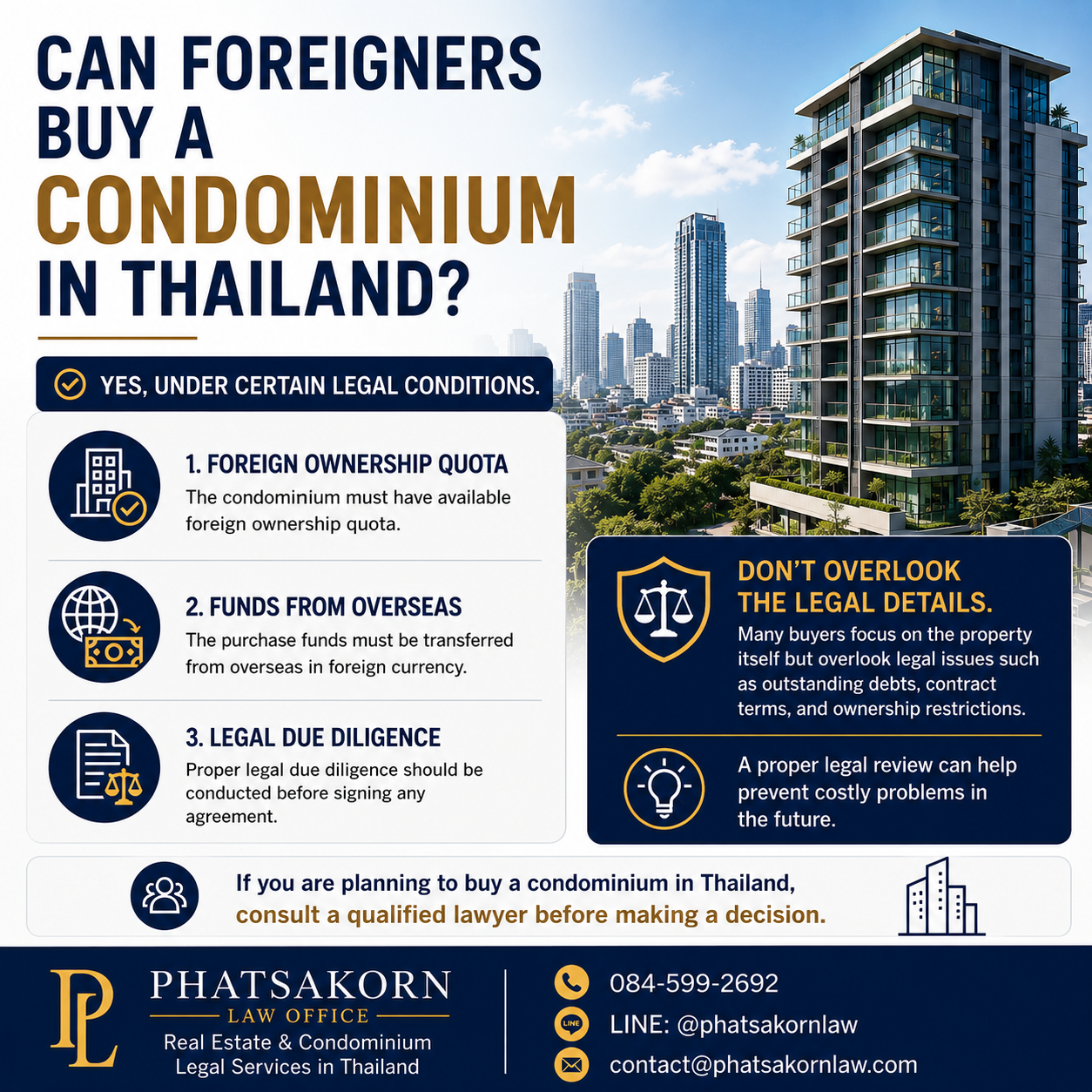
One of the most common questions foreign nationals ask when coming to Thailand is: "Can I actually own property here?" The short answer is yes — but only under specific conditions. Understanding the rules before you sign anything is not optional; it is essential.
The Three Core Requirements
Foreign Ownership Quota Must Be Available
In any given condominium building, foreigners may own no more than 49% of the total unit area. If that quota is already filled, a foreigner cannot take freehold title — regardless of the seller's willingness. Always confirm the current foreign quota with the juristic person of the building before committing to a purchase.
Funds Must Be Transferred from Overseas in Foreign Currency
To register freehold ownership at the Land Department, the buyer must produce a Foreign Exchange Transaction (FET) form — evidence that the purchase funds were remitted into Thailand from abroad in foreign currency and converted to Thai Baht here. Funds already held in a Thai bank account generally do not qualify. This is a non-negotiable requirement.
Legal Due Diligence Before Signing
Before executing any sale and purchase agreement or paying a deposit, a proper legal review should be conducted. Many buyers focus on the unit itself and overlook critical issues that only appear in the paperwork.
What Due Diligence Should Cover
A thorough legal review before purchase protects you from problems that are difficult — and expensive — to fix after the fact:
Common Mistakes Foreign Buyers Make
Most legal problems in condo purchases are avoidable. The issues we see most often:
- Paying a deposit before legal review — once you pay, your leverage disappears. Always review the contract first.
- Wiring funds from a local account — funds not remitted from abroad will not qualify for the FET form, blocking the title transfer.
- Relying on the developer's or agent's lawyer — that lawyer represents their client, not you. You need independent legal advice.
- Ignoring outstanding common fees — these carry over to the new owner and can amount to several years' worth of unpaid charges.
- Buying in a building already at foreign quota — this forces the buyer into a leasehold structure, which carries very different rights.
Planning to Buy a Condo in Thailand?
We provide independent legal due diligence, contract review, and title deed verification for foreign buyers — all in English. Consult us before you sign.
contact@phatsakornlaw.com +66 84 599 2692LINE: @phatsakornlaw
— Atty. Phatsakorn, Phatsakorn Law Office