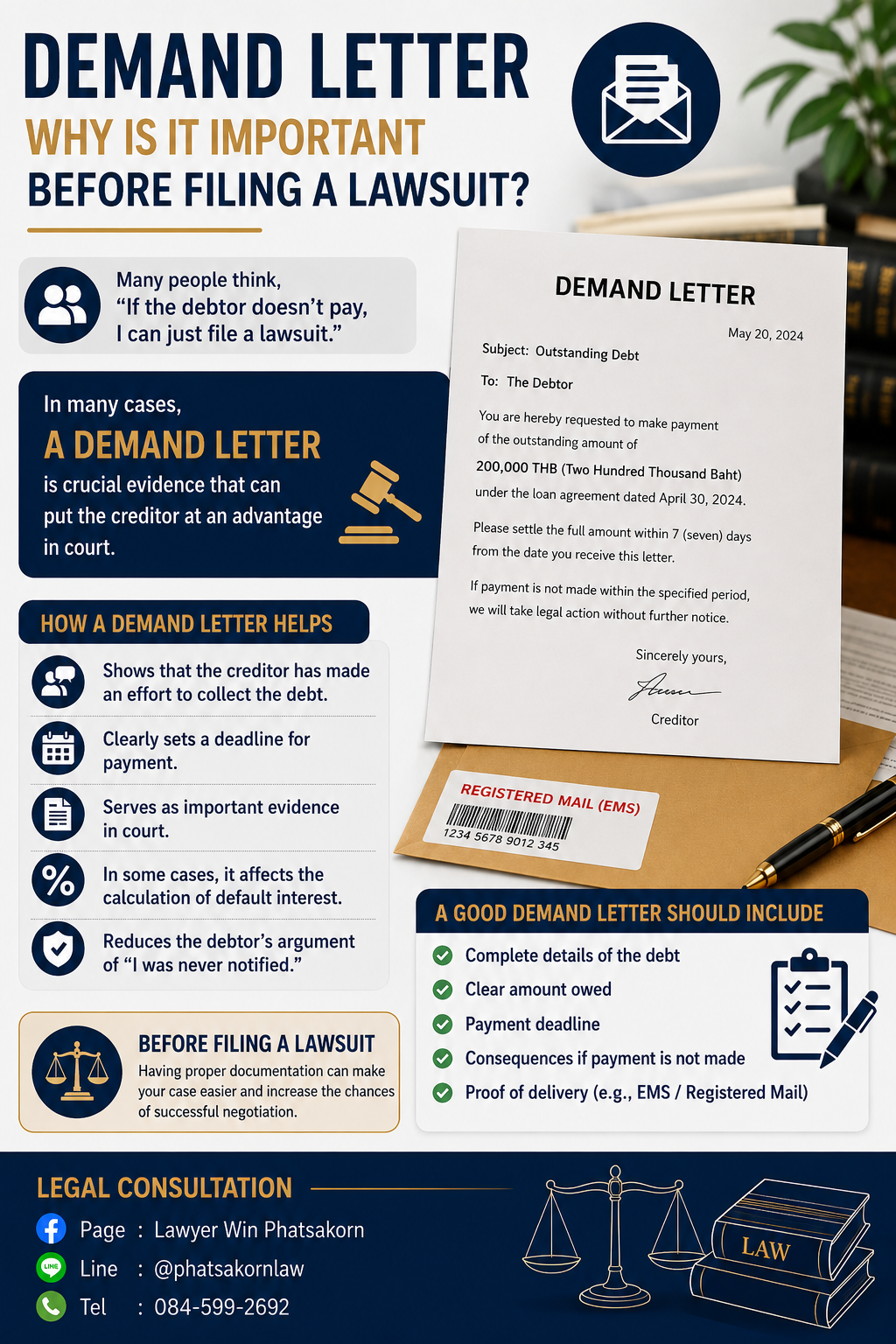
Many creditors believe that if a debtor refuses to pay, they can immediately go to court. In practice, skipping this step can weaken your position. Sending a formal Demand Letter first is one of the most effective — and often overlooked — tools in debt recovery.
Why a Demand Letter Matters
A properly drafted Demand Letter provides significant legal advantages to the creditor:
What a Demand Letter Should Include
An effective Demand Letter is not just a payment reminder — it is a legal document. It should contain all of the following:
Details of the Debt
Clearly identify the underlying transaction — the contract, invoice, loan agreement, or other basis for the claim. Reference relevant dates and document numbers.
Amount Owed
State the principal amount and any accrued interest or fees. Break down the figures clearly to avoid disputes about the total owed.
Payment Deadline
Specify a firm deadline — typically 7 to 15 days from the date of receipt. This creates the legal trigger for default and starts the clock on interest.
Consequences of Non-Payment
State clearly what you will do if payment is not received — file a civil lawsuit, seek enforcement of a judgment, or take other legal action.
Proof of Delivery
Send via Registered Mail, EMS, or Courier with tracking. Keep the receipt and tracking confirmation — this is your evidence that the debtor received the notice.
Can a Demand Letter Replace a Lawsuit?
Not always — but in many cases, it can. Debtors who receive a formal letter drafted by an attorney often respond more seriously than when approached informally. The cost of sending a Demand Letter is a fraction of the cost of litigation, and it frequently leads to negotiated repayment or full settlement.
If the debtor still fails to pay after the deadline, the letter becomes part of your court file and strengthens your case from day one.
Need Help with Debt Recovery in Thailand?
We assist foreign individuals and businesses with formal demand letters, debt collection, and civil litigation — all communicated in English.
contact@phatsakornlaw.com +66 84 599 2692LINE: @phatsakornlaw
— Atty. Phatsakorn, Phatsakorn Law Office